
Patients in Rocklin often ask the same question: crowns vs. veneers — which does your tooth actually need? Both restorations can dramatically improve your smile. But they serve very different clinical purposes. Choosing the wrong one can cost you time, money, and tooth structure. At Rocklin Comprehensive Dentistry, Dr. Purna Patel helps patients understand exactly why one option is recommended over the other.
This article walks you through the clinical reasoning behind each choice. It is not about what looks better in a brochure. It is about what your specific tooth actually requires to stay healthy and functional for years to come.
What Are Crowns and Veneers, Really?
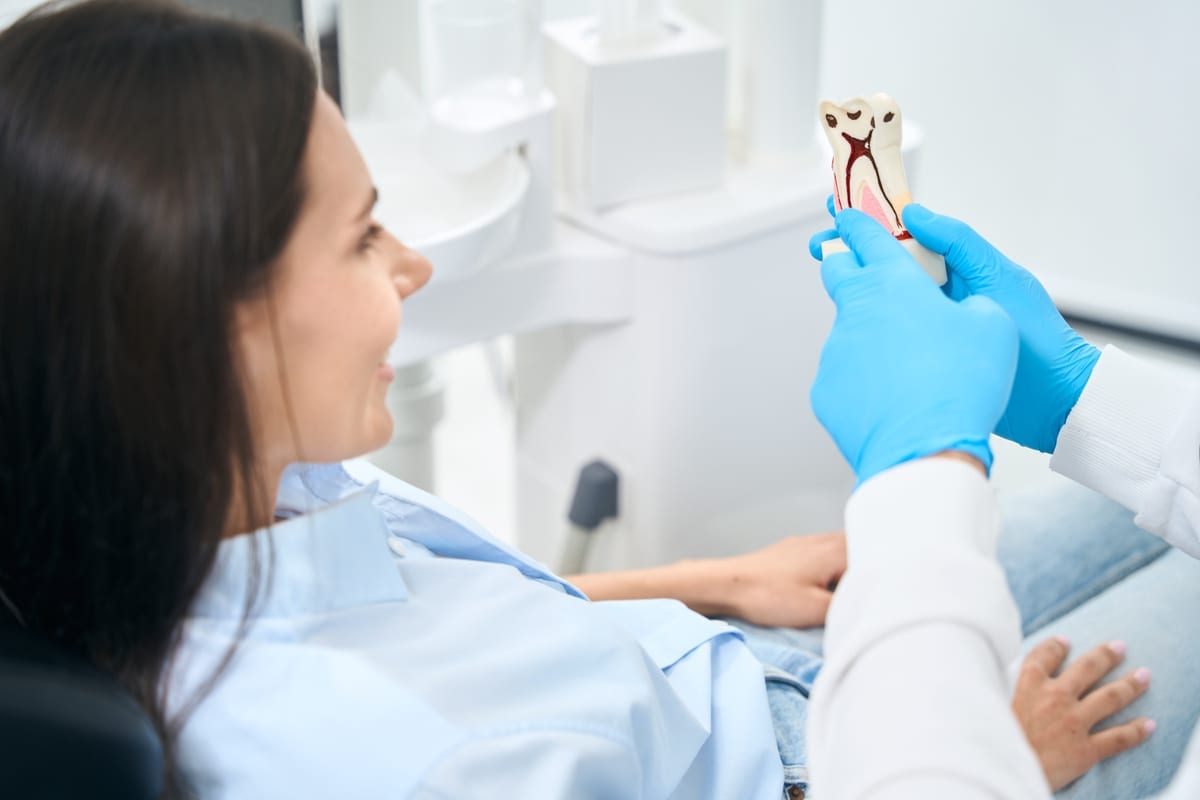
A dental crown is a full-coverage restoration. It wraps completely around the entire visible tooth, from the gumline up. Crowns restore teeth that are structurally compromised, heavily decayed, cracked, or have undergone a root canal. They protect what remains of the natural tooth beneath them.
A veneer is a thin porcelain or composite shell. It bonds only to the front surface of a tooth. Veneers are cosmetic solutions. They improve color, shape, minor chips, and spacing issues. They do not reinforce a weakened tooth the way a crown does.
Think of it this way: a crown is armor, and a veneer is a facade. Both are valuable — but for completely different problems.
When Your Dentist Will Recommend a Crown in Rocklin
Dr. Patel recommends crowns when a tooth’s structural integrity is at risk. Several clinical situations call for a crown rather than a veneer. Understanding these situations helps you make sense of your treatment plan.
- Large cavities — When decay affects more than half the tooth, a filling will not hold. A crown distributes biting force evenly.
- Cracked or fractured teeth — A crack that extends below the gumline or into the cusp needs full coverage protection.
- After root canal treatment — Root canal-treated teeth become brittle over time. A crown prevents fracture.
- Severely worn teeth — Patients with bruxism (teeth grinding) often wear teeth down significantly. Crowns rebuild lost height.
- Broken cusps — A missing cusp compromises chewing function. A crown restores full anatomy.
- Existing large restorations — When an old filling takes up most of the tooth, a crown is a safer long-term solution.
Crowns require more tooth preparation than veneers. Your dentist removes decay and shapes the tooth before fitting the crown. This is necessary — not excessive — when structural support is the goal.
When a Veneer Is the Right Clinical Choice
Veneers are appropriate when the tooth is structurally sound. The goal is purely aesthetic correction. If your tooth is healthy but you dislike its appearance, a veneer accomplishes the improvement with minimal removal of tooth enamel.
Here are the situations where veneers make more clinical sense than crowns:
- Permanent staining — Tetracycline stains or fluorosis that whitening cannot fix respond well to veneers.
- Minor chips — Small cosmetic chips on front teeth are ideal candidates for veneers.
- Slight misalignment — Veneers can create the appearance of straighter teeth without orthodontics in select cases.
- Gaps between teeth — Small diastemas can be closed with veneers when the bite is stable.
- Naturally small or misshapen teeth — Veneers add size and improve proportions without full tooth coverage.
The key difference is this: veneers require a healthy tooth underneath. They do not protect. They improve. If decay, cracks, or structural damage is present, a veneer will fail — and the tooth beneath it can worsen.
The Overlap Zone: When the Decision Gets Complicated
Sometimes a tooth sits in a gray area. It has minor damage, but the overall structure is still largely intact. This is where clinical judgment — not a checklist — determines the right path.
Dr. Patel evaluates several factors during this assessment. How much natural tooth structure remains? Where is the damage located? What is the patient’s bite like? How much do opposing teeth stress this tooth during chewing? These questions guide the recommendation.
For front teeth with minor damage, a veneer may still be viable if the structural concern is minimal. For back teeth that bear heavy chewing forces, a crown is almost always the safer option — even when the damage seems small. Back teeth endure far more pressure than front teeth during normal function.
It is also worth noting that other restorative options exist. In some cases, Dental Implants are a better long-term solution than saving a compromised tooth with a crown. Similarly, Dental Bridges may be recommended when a tooth cannot be saved and a gap needs to be addressed. Dr. Patel discusses all relevant options so you can make an informed decision.
How to Prepare for Your Consultation at Rocklin Comprehensive Dentistry
Coming prepared helps you get the most out of your appointment. Here is what to expect and how to engage productively with your dentist.
First, write down your concerns before you arrive. Note any sensitivity, pain, or aesthetic issues you have noticed. Be honest about teeth grinding or clenching habits — this directly affects which restoration will hold up over time.
During your exam, Dr. Patel will take X-rays and perform a clinical assessment. This reveals the extent of damage that is not visible to the naked eye. X-rays show root health, bone levels, and the depth of any decay. A proper diagnosis always precedes any treatment recommendation.
Ask your dentist to explain why one option is being chosen over the other. A clear clinical reason should always accompany the recommendation. At Rocklin Comprehensive Dentistry, patient education is central to every appointment. You deserve to understand your treatment plan fully before any work begins.
Conclusion: The Right Choice Protects Your Long-Term Oral Health
The crowns vs. veneers question does not have a universal answer. The right choice depends entirely on your tooth’s condition, location, and functional demands. Crowns protect and rebuild. Veneers refine and enhance. Both are excellent tools when used for the right clinical reason.
Dr. Purna Patel and the team at Rocklin Comprehensive Dentistry are here to guide Rocklin patients through exactly this kind of decision. You will always receive a clear explanation and a recommendation rooted in clinical evidence — not cosmetic trends. Book Now to schedule your appointment with our team.
Frequently Asked Questions
Can a veneer be placed on a cracked tooth?
Generally, no. A veneer does not provide structural support. If a crack affects tooth strength, a crown is the appropriate restoration. Placing a veneer over a crack can allow the damage to worsen beneath the surface.
Do crowns look natural?
Modern porcelain and zirconia crowns are designed to closely match the color and translucency of natural teeth. When placed by an experienced dentist like Dr. Patel, crowns blend naturally with surrounding teeth and are virtually indistinguishable.
How long do veneers last compared to crowns?
Veneers typically last 10 to 15 years with proper care. Crowns often last 15 to 25 years or longer, depending on the material used and how well the patient maintains their oral hygiene. Both require regular dental checkups to monitor their condition.
Is one option more painful than the other?
Both procedures are performed under local anesthesia, so you should not feel pain during treatment. Crowns require more tooth preparation, which may result in slightly more post-treatment sensitivity. This typically resolves within a few days.
Can I get veneers on my back teeth?
Veneers are rarely placed on back teeth. Back teeth endure significant chewing pressure. Veneers are not strong enough to withstand that force consistently. For back teeth, crowns or other restorative options are almost always the better clinical choice.