A toothache can range from a mild annoyance to a throbbing, sleepless-night kind of pain. Many patients in Rocklin wonder: is your toothache a warning sign you need a root canal? The answer is not always obvious. However, certain symptoms strongly suggest that the inner pulp of your tooth is infected or inflamed — and that waiting could make things much worse.
At Rocklin Comprehensive Dentistry, Dr. Purna Patel helps patients understand what their pain is telling them. This article walks you through the key warning signs, explains what happens inside an infected tooth, and shows you why acting quickly leads to better outcomes.
What Warning Signs Suggest You Need a Root Canal in Rocklin?
Not every toothache means you need a root canal. However, some symptoms are hard to ignore and should never be dismissed. Recognizing these signs early gives you the best chance of saving your natural tooth.
Here are the most common warning signs to watch for:
- Severe, persistent toothache — Pain that does not go away, especially when biting or chewing
- Prolonged sensitivity to heat or cold — Discomfort that lingers long after the temperature stimulus is removed
- Darkening or discoloration of the tooth — A sign the pulp tissue may be dying inside
- Swollen or tender gums — Inflammation near the root of a specific tooth
- A pimple-like bump on the gums — Known as a dental abscess or fistula, this drains infection
- Cracked or chipped tooth with pain — Damage that exposes the inner pulp to bacteria
If you are experiencing one or more of these symptoms, do not wait. Schedule an evaluation with Dr. Patel as soon as possible. Early intervention can mean the difference between saving and losing your tooth.
Understanding What Happens Inside an Infected Tooth
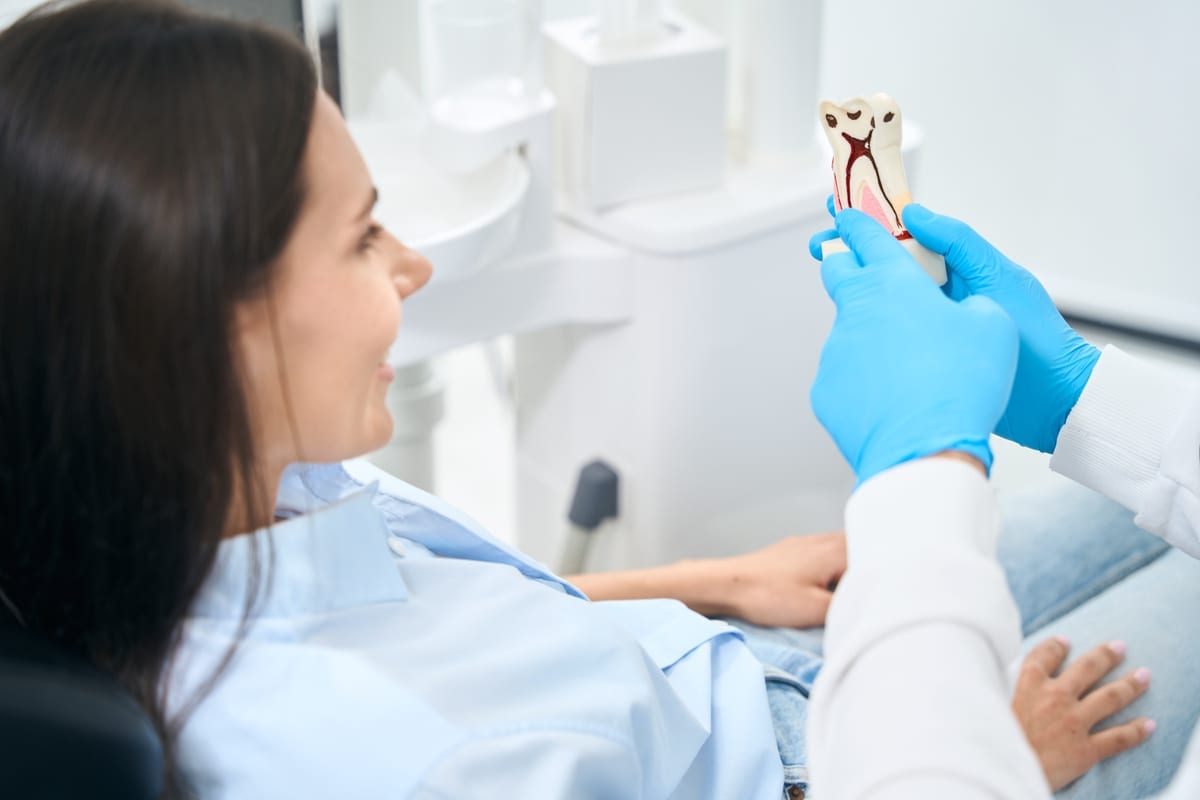
Your tooth has layers. The outer layer is hard enamel. Beneath that is dentin. At the very center is the pulp — soft tissue containing nerves and blood vessels.
When bacteria reach the pulp through a crack, deep cavity, or repeated dental work, infection sets in. The pulp becomes inflamed and eventually dies. This is what causes that deep, throbbing pain many patients describe.
As the infection grows, it can spread beyond the tooth root. It moves into surrounding bone and tissue. At this stage, a simple root canal becomes a more complex procedure — and tooth loss becomes a real risk.
A root canal removes the infected pulp, cleans the canals, and seals the tooth. This stops the infection from spreading. Most patients feel significant relief shortly after the procedure.
Why Waiting Makes the Infection — and the Outcome — Worse
Dental infections do not resolve on their own. Without treatment, the bacteria keep multiplying. The infection spreads deeper into the jawbone and surrounding teeth.
Here is what happens when patients delay treatment:
- The abscess grows larger and more painful
- The surrounding bone begins to deteriorate
- Nearby healthy teeth become vulnerable to infection
- Tooth extraction may become the only option left
- Replacing a lost tooth requires more complex solutions, such as Dental Implants Rocklin or Dental Bridges Rocklin
- In rare but serious cases, oral infections can affect overall health
Patients sometimes avoid treatment because they fear the procedure itself. The truth is that modern root canal therapy — especially with an experienced dentist like Dr. Patel — is far more comfortable than most people expect. The real discomfort comes from leaving an infection untreated.
Acting quickly also means a simpler, faster procedure. Early-stage infections are easier to treat. The canals are cleaner, the tissue is less damaged, and recovery is smoother.
What to Expect During Root Canal Treatment at Rocklin Comprehensive Dentistry
Many patients feel anxious about root canals. Understanding the process helps reduce that fear. Dr. Patel and the team at Rocklin Comprehensive Dentistry prioritize patient comfort at every step.
Here is a general overview of what the procedure involves:
- Examination and X-rays — Dr. Patel evaluates the tooth and confirms the diagnosis with imaging
- Local anesthesia — The area is fully numbed so you feel little to no pain during treatment
- Pulp removal — The infected tissue is carefully removed from the tooth’s inner chambers
- Canal cleaning and shaping — The canals are cleaned, disinfected, and shaped for filling
- Sealing the tooth — A biocompatible material fills and seals the canals
- Crown placement — A dental crown is usually placed afterward to restore strength and function
Most root canal procedures are completed in one or two appointments. Afterward, the tooth looks and functions just like a natural tooth. With proper care, it can last a lifetime.
When a Toothache Is Actually a Dental Emergency
Some toothaches escalate quickly. If your pain becomes unbearable or you notice facial swelling, you may be dealing with a dental emergency. This requires immediate attention.
Signs that your toothache has become urgent include:
- Severe swelling in your jaw, cheek, or neck
- Difficulty swallowing or breathing
- Fever alongside tooth pain
- A spreading abscess visible on your gums
Rocklin Comprehensive Dentistry provides emergency dentistry services. Do not wait for a routine appointment if your symptoms are severe. Contact the practice right away so Dr. Patel can assess and treat you promptly.
Even if your pain seems manageable right now, do not assume it will pass. Dental infections are unpredictable. What feels mild today can escalate rapidly within days.
Protecting Your Smile After Root Canal Treatment
Once your root canal is complete, your tooth needs ongoing care. The treated tooth is still vulnerable without proper protection. A dental crown is typically placed to cover and strengthen it.
After treatment, Dr. Patel will guide you on home care and follow-up visits. Maintaining regular teeth cleanings and checkups helps catch any future issues early. Good oral hygiene habits extend the life of your treated tooth significantly.
Patients who follow through with their post-treatment plan rarely experience complications. Your restored tooth can function normally for many years with routine care and attention.
Conclusion: Do Not Ignore What Your Tooth Is Telling You
A toothache is your body’s way of signaling that something is wrong. If you are asking yourself whether your toothache is a warning sign you need a root canal in Rocklin, the answer is: do not wait to find out. Prompt evaluation by Dr. Purna Patel at Rocklin Comprehensive Dentistry can save your tooth, relieve your pain, and prevent a small problem from becoming a serious one. Book Now to schedule your appointment with our team.
Frequently Asked Questions
How do I know if my toothache requires a root canal or just a filling?
A filling is usually sufficient for surface-level decay without pulp involvement. If you have deep pain, prolonged sensitivity, swelling, or a visible abscess, the pulp may be infected. Dr. Patel will take X-rays and perform a clinical exam to determine the right treatment for your specific situation.
Is a root canal painful?
Most patients are surprised by how comfortable modern root canal therapy is. Dr. Patel uses local anesthesia to numb the area thoroughly before beginning. Many patients report that the procedure feels similar to getting a filling. The pain you feel before treatment — from the infection itself — is typically far worse than the procedure.
What happens if I ignore a toothache that needs a root canal?
Ignoring an infected tooth allows the bacteria to spread. The infection can move into surrounding bone, neighboring teeth, and soft tissue. Over time, the tooth may become unsalvageable and require extraction. Replacing a missing tooth then requires additional procedures such as implants or bridges, which are more involved than root canal treatment.
How long does a root canal procedure take?
Most root canal procedures at Rocklin Comprehensive Dentistry take between 60 and 90 minutes per appointment. Some cases may require a second visit to complete. The complexity of the infection and the number of canals in the tooth both affect treatment time. Dr. Patel will give you a clear timeline during your consultation.
Can children need root canals too?
Yes, children can develop infected pulp tissue, though the procedure differs slightly for baby teeth versus permanent teeth. Rocklin Comprehensive Dentistry offers pediatric dentistry services and addresses children’s dental concerns with age-appropriate care and a gentle approach. If your child has a persistent toothache, bring them in for an evaluation as soon as possible.