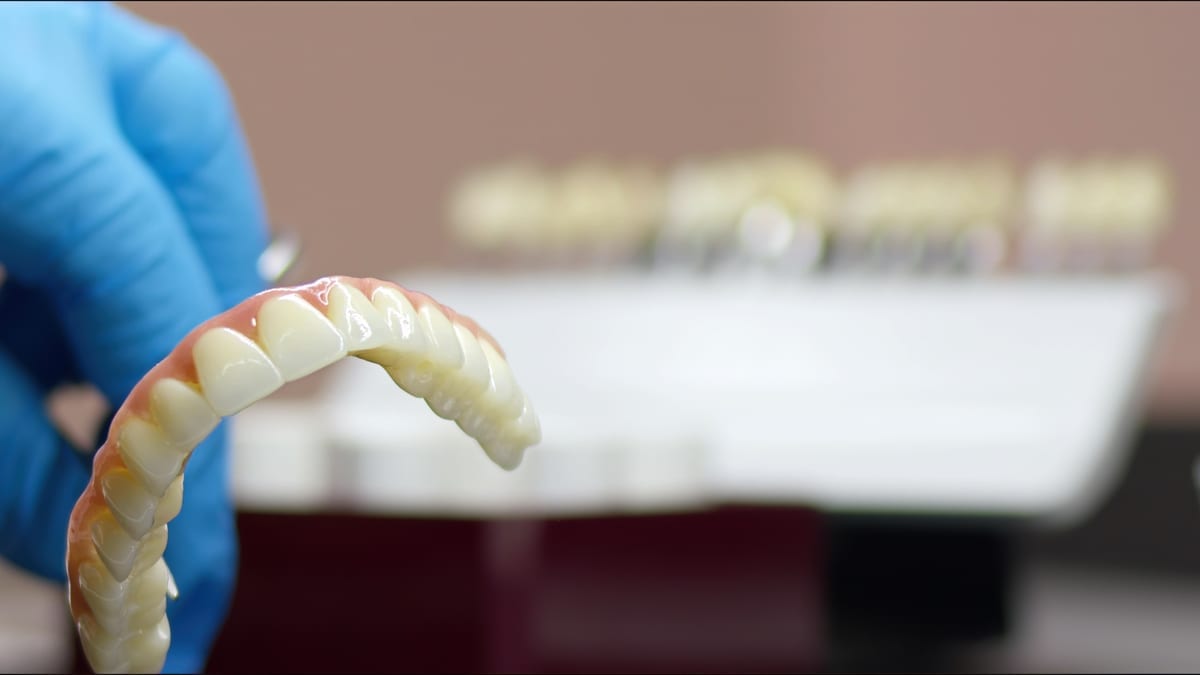
If the word dentures brings up images of ill-fitting teeth soaking in a glass overnight, you’re not alone. Many Granite Bay residents carry that same outdated picture. But modern dentures aren’t your grandmother’s—here’s what changed in Granite Bay and why today’s options are worth a second look. The technology, materials, and fit precision have all improved dramatically in recent years.
Dr. Purna Patel at Rocklin Comprehensive Dentistry works with Granite Bay patients every week who are surprised by what modern dentistry now offers. What used to feel bulky and embarrassing now feels and looks completely natural. This article breaks down exactly what has changed and what those changes mean for you.
What Made Older Dentures So Uncomfortable?
Traditional dentures from decades past were made from acrylic materials that didn’t always match the patient’s unique mouth shape. The fit was often approximate at best. Over time, bone loss beneath the gums caused the dentures to loosen further. Slipping, clicking, and sore spots were common complaints.
Older adhesives helped temporarily but couldn’t solve the underlying fit problem. Patients often avoided eating certain foods entirely. Social anxiety around laughing or speaking was real and understandable. That experience shaped a generation’s view of dentures — and it stuck.
Today’s starting point is completely different. Digital scanning and advanced fabrication methods mean the fit is precise from day one. The goal now is a restoration that works with your anatomy, not against it.
Modern Denture Materials and Fit Precision in Granite Bay
Contemporary dentures use high-grade acrylic resins, flexible polymers, and even porcelain blends. These materials mimic the light-reflecting qualities of natural teeth. The result is a smile that looks genuinely real — not artificial or overly uniform.
Digital impressions have replaced the old goopy molds many patients remember. A precise digital scan captures every contour of your gum tissue. That data feeds into computer-aided design tools that create a custom fit. The margin for error shrinks dramatically compared to older manual techniques.
Here are some key improvements in modern denture materials and design:
- Thinner, lighter bases that feel less bulky in the mouth
- Teeth shaded and shaped to complement your facial features
- Flexible partial dentures that grip naturally without metal clasps
- Better stain and wear resistance for longer-lasting aesthetics
- Improved tissue-colored bases that blend with your gum line
These advances matter most to patients who previously gave up on dentures due to discomfort. A poor first experience doesn’t have to define what’s possible today.
Implant-Supported Dentures: The Biggest Game Changer
The single biggest advancement in tooth replacement over the past two decades is implant technology. Dental Implants are small titanium posts placed into the jawbone. They act as artificial tooth roots and provide a stable anchor for restorations.
When dentures attach to implants, everything changes. The denture doesn’t shift, slip, or require adhesive. Chewing force transfers into the jawbone just like natural teeth. This also slows down the bone loss that makes conventional dentures loosen over time.
Implant-supported dentures come in two main styles:
- Snap-on (removable): The denture clips onto implants and can be removed for cleaning.
- Fixed (permanent): The denture screws permanently into place and only a dentist removes it.
Both styles offer far greater stability than conventional dentures. Many patients describe the feeling as close to having their natural teeth back. For Granite Bay residents who ruled out dentures based on past experiences, implant-supported options deserve serious consideration.
It’s also worth noting that Dental Bridges remain another strong option for patients missing a few teeth rather than a full arch. Dr. Patel discusses all available options during your consultation to match the right solution to your specific situation.
Aesthetics: Looking Natural Has Never Been More Achievable
One hallmark of older dentures was the overly perfect, uniform look. Rows of identical bright-white teeth looked artificial. Modern denture teeth are designed with subtle variations in color, translucency, and shape. That variety is exactly what makes natural teeth look natural.
Dental technicians now use shade guides with dozens of options. Tooth shape libraries include variations for different face shapes and ages. The goal is a smile that looks like yours — not a generic replacement set.
Gum tissue coloring has also improved. The base material now comes in multiple pink and coral shades. Technicians blend these shades to match each patient’s actual tissue tone. The combined effect is a restoration that blends in instead of standing out.
For Granite Bay patients concerned about aesthetics, this is genuinely encouraging news. A consultation allows Dr. Patel to show you realistic examples and walk through what results are achievable for your case specifically.
The Adjustment Period Is Shorter Than You Think
Even with modern dentures, there is still an adjustment period. Your mouth needs time to adapt to any new prosthetic. Speech and chewing feel different at first. Most patients find the adjustment takes days to a couple of weeks, not months.
Here’s what makes the modern adjustment easier:
- Better initial fit means less irritation from the start
- Lighter materials reduce the sense of bulk in the mouth
- More natural tooth placement supports clearer speech faster
- Follow-up adjustment appointments fine-tune any pressure points quickly
Dr. Patel and the team at Rocklin Comprehensive Dentistry schedule follow-up visits specifically for this reason. Small adjustments early on prevent bigger comfort issues later. Patients are never left to struggle through discomfort on their own.
Is It Time to Reconsider Dentures?
If you’ve been avoiding the conversation because of what you remember or what a family member experienced, now is a good time to revisit it. Modern dentures aren’t your grandmother’s — and that’s not just a marketing phrase. The underlying technology has genuinely changed what’s possible.
Granite Bay residents have access to these advanced options right here locally. Dr. Purna Patel brings both the clinical expertise and the patient-focused approach that makes these conversations feel comfortable and productive. You deserve accurate, current information — not decade-old assumptions.
The best next step is a consultation. You’ll get a full picture of what options fit your situation, your goals, and your overall oral health. Book Now to schedule your appointment with our team.
Frequently Asked Questions
How long do modern dentures typically last?
Most modern dentures last between seven and ten years with proper care. The fit may need periodic adjustment as your jaw naturally changes over time. Regular dental checkups help catch fit issues before they become serious problems.
Are implant-supported dentures available to most patients?
Most healthy adults are candidates for implant-supported dentures. Adequate jawbone density is important, though bone grafting can help patients who have experienced bone loss. Dr. Patel evaluates each patient individually to determine the best approach.
Do modern dentures require special cleaning routines?
Removable dentures should be brushed daily with a soft denture brush and soaked overnight in a denture-safe solution. Fixed implant-supported dentures are cleaned much like natural teeth using a toothbrush and floss. Your care instructions will be specific to your type of restoration.
Will dentures affect how I eat and speak?
There is a short adjustment period during which eating and speaking may feel different. Most patients adapt within one to two weeks. Modern dentures, especially implant-supported versions, allow patients to eat a much wider variety of foods than older conventional dentures permitted.
What is the difference between partial and full dentures?
Full dentures replace an entire arch of missing teeth — upper, lower, or both. Partial dentures fill gaps when some natural teeth remain and are designed to blend with those existing teeth. Dr. Patel will recommend the appropriate type based on your specific tooth loss pattern and oral health.