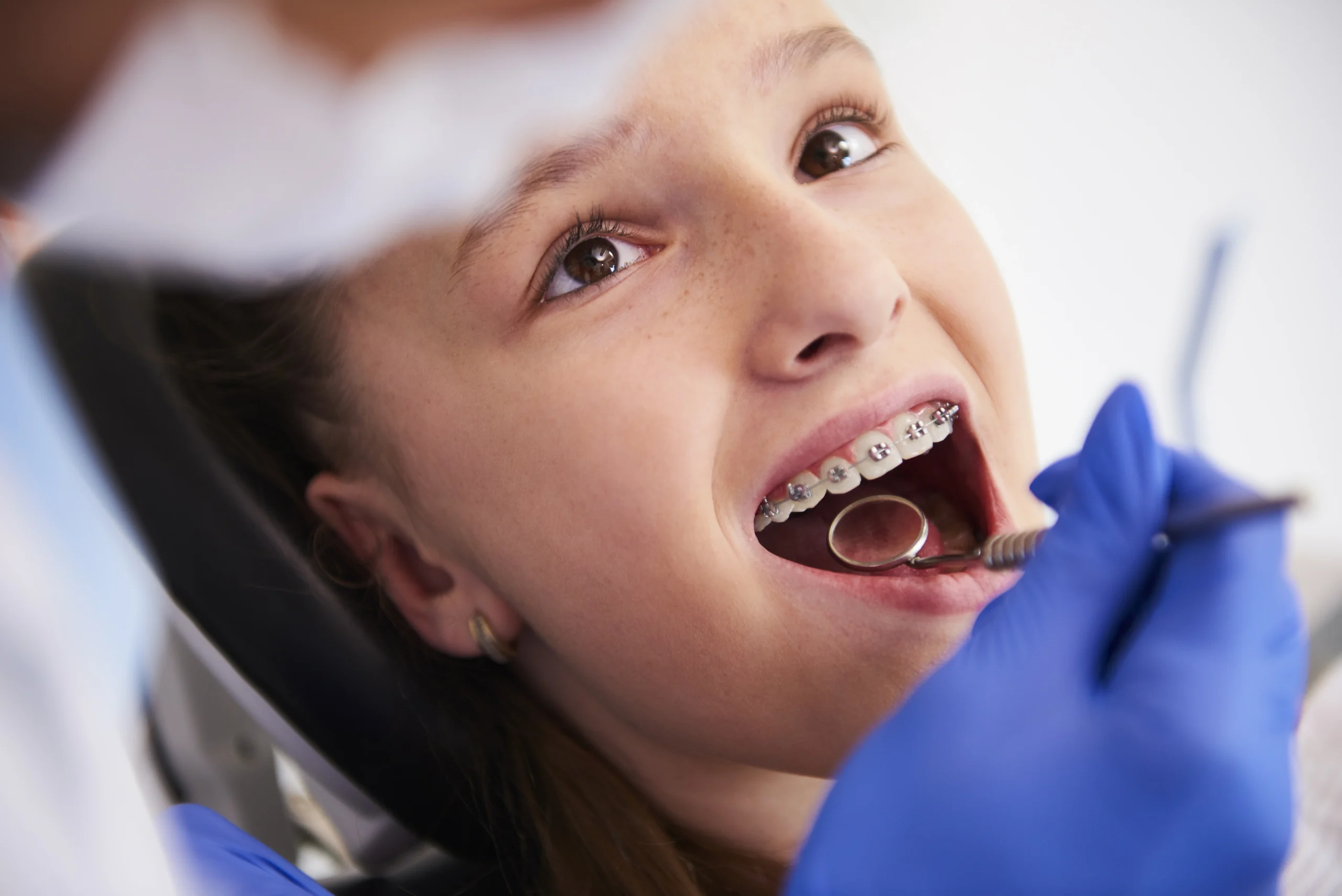

Missing teeth can affect your confidence, chewing, speech, and even your overall oral health. Thankfully, modern dentistry offers several ways to restore your smile and function. Here’s an overview of the most common options:
Losing a tooth—or several—can change more than just your smile. It can affect how you eat, speak, and even how confident you feel in everyday situations. The good news? Modern dentistry offers several reliable ways to replace missing teeth, and there’s a solution for almost every lifestyle and budget.
If you’re exploring your options, this guide will walk you through the most common treatments: dental implants, fixed bridges, partial dentures, and full dentures—so you can make a confident, informed choice.
Why Replacing Missing Teeth Matters
Before diving into the options, it’s worth understanding why timely replacement is important:
- Prevents neighboring teeth from shifting
- Helps maintain jawbone strength
- Restores proper chewing and speech
- Supports facial structure
- Boosts confidence in your smile
Ignoring missing teeth can lead to bigger oral health issues down the road—so acting early is always a smart move.
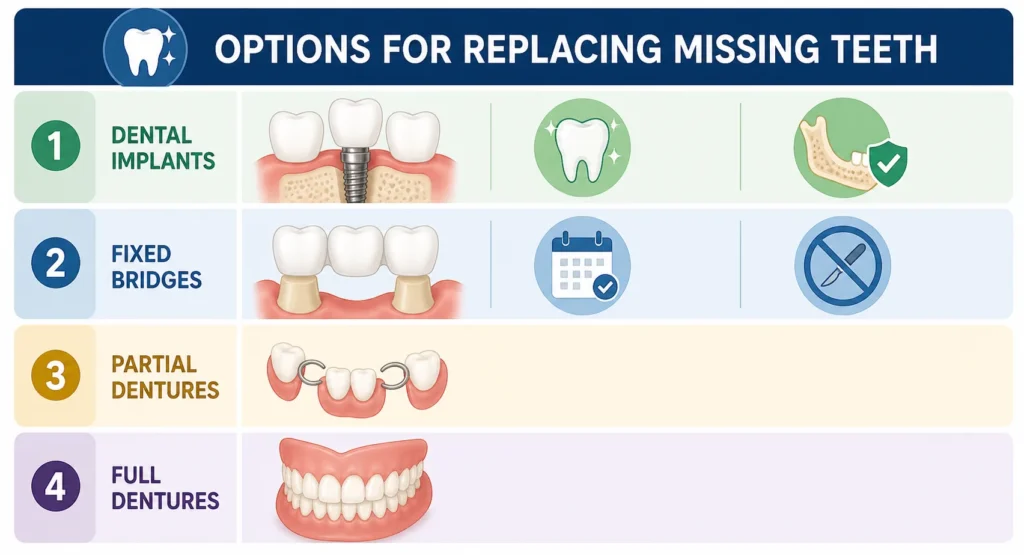
Dental Implants: The Gold Standard for Tooth Replacement
What Are Dental Implants?
Dental implants are small titanium posts placed into the jawbone to act as artificial tooth roots. Once healed, they support a crown, bridge, or even full dentures.
Why Patients Love Them
- Look and feel like natural teeth
- Help preserve jawbone health
- Long-lasting (often decades with proper care)
- No impact on surrounding teeth
Things to Consider
- Requires minor surgical procedure
- Healing time can take a few months
- Higher upfront cost compared to other options
Best For:
Patients looking for a permanent, natural-looking solution and who have healthy gums and sufficient bone support.
Fixed Bridges: A Reliable, Non-Surgical Option
What Is a Fixed Bridge?
A fixed dental bridge literally “bridges” the gap left by missing teeth. It uses crowns on adjacent teeth to support an artificial tooth (or teeth) in between.
Benefits of Fixed Bridges
- Faster than implants (usually completed in a few visits)
- No surgery required
- Restores chewing and appearance effectively
Things to Keep in Mind
- Requires reshaping of healthy adjacent teeth
- Doesn’t prevent bone loss under the missing tooth
- Typically lasts 10–15 years with good care
Best For:
Patients who want a fixed (non-removable) solution but may not be candidates for implants.
Partial Dentures: Flexible and Budget-Friendly
What Are Partial Dentures?
Partial dentures are removable appliances designed to replace one or several missing teeth. They usually clip onto your natural teeth for support.
Why Choose Partial Dentures?
- More affordable than implants or bridges
- Non-invasive (no surgery needed)
- Easy to adjust or replace
Considerations
- May feel bulky at first
- Requires daily removal and cleaning
- Less stable than fixed options
Best For:
Patients missing multiple teeth in different areas who want a cost-effective and non-surgical solution.
Full Dentures: Restoring a Complete Smile
What Are Full Dentures?
Full dentures replace all teeth in the upper jaw, lower jaw, or both. They rest on the gums and are custom-made for comfort and appearance.
Benefits of Full Dentures
- Restore full smile and facial structure
- Improve speech and chewing ability
- Affordable compared to full-mouth implants
Things to Consider
- May require adhesives for better stability
- Can take time to adjust
- Bone loss over time may affect fit
Best For:
Patients who have lost most or all of their teeth and want a complete, functional replacement.
Which Option Is Right for You?
Every smile is unique, and the best solution depends on several factors:
- Number of missing teeth
- Overall oral health
- Bone density
- Budget and long-term goals
- Personal comfort and lifestyle
At Rocklin Comprehensive Dentistry, we’ll discuss every option to help you make an informed choice.
Ask Yourself:
- Do I want a permanent or removable solution?
- Am I comfortable with surgery?
- How important is long-term durability?
- What fits my budget now—and later?
A consultation with your dentist can help answer these questions and guide you toward the most suitable option.
What Happens If You Don’t Replace Missing Teeth?
It might seem manageable at first, but over time, missing teeth can lead to:
- Shifting of surrounding teeth
- Bite misalignment
- Jawbone deterioration
- Increased risk of gum disease
- Changes in facial appearance
Replacing missing teeth isn’t just cosmetic—it’s essential for long-term oral health.
Final Thoughts: Invest in Your Smile
Choosing how to replace missing teeth is a personal decision—but it’s also an important one. Whether you opt for the long-term stability of dental implants or the flexibility of dentures, the goal is the same: restoring your comfort, function, and confidence.
Ready to restore your smile? Call 916-315-3558 or request an appointment online at www.rcdentistry.com.